Guides
Common Problems
Find the problem you are seeing, learn what usually causes it, and see which service fixes it.
Find the problem you are seeing, learn what usually causes it, and see which service fixes it.
A foundation corner carries load from two walls that meet, so the force is concentrated there. Water collects at the outside corner and freezes. If…
Read the cause and the fix → Foundation Access Vent InstallationCrawl space vents are meant to let air move across the space. When soil or landscaping covers them, humid air has no way out and ground moisture has…
Read the cause and the fix → Garage Realignment SolutionsA garage door runs on tracks that are set to the opening. When the slab settles or the wall moves, the opening goes out of square and the tracks…
Read the cause and the fix → Garage Realignment SolutionsA garage slab is usually poured separately from the house foundation and rests on compacted fill. If that fill settles, or the slope at the door is…
Read the cause and the fix → Garage Realignment SolutionsA garage floor should sit at or slightly above the driveway so water drains out. When the apron is high or the floor has settled, the slope reverses…
Read the cause and the fix → Gunite Foundation Wall ServicesGunite is applied as a shell, and its surface depends on a sound outer layer. Water that gets behind that layer pushes it off in flakes. Once the…
Read the cause and the fix → Gunite Foundation Wall ServicesGunite is concrete sprayed onto a form or a reinforcement grid, and it cures with some shrinkage. Cracks form where the material is thin, where it…
Read the cause and the fix → Gunite Foundation Wall ServicesGunite is concrete sprayed onto a form or a soil face, and it is not waterproof on its own. Water moves through hairline cracks, cold joints, and…
Read the cause and the fix → Draining SystemsA gutter is meant to collect roof water and move it away from the house. When it overflows, the water lands in a strip along the foundation, where…
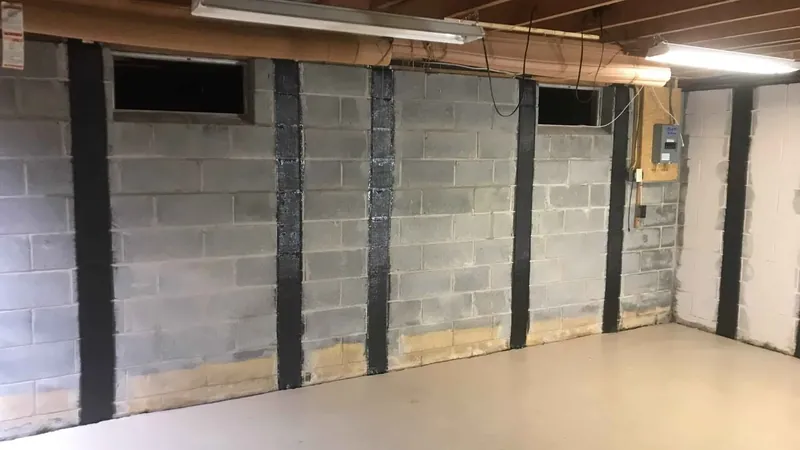
Read the cause and the fix → Carbon Fiber ReinforcementFilling a crack seals the surface but does nothing about the force that opened it. If the wall is still moving, or water is still pushing from…
Read the cause and the fix → Moisture ControlWarm air holds more water than cool air. When that air reaches the cool concrete, it gives up moisture on the surface. Concrete also pulls water from…
Read the cause and the fix → Gunite Slope Stabilization ServicesRain soaks into the soil, adds weight, and reduces friction between layers. Water also builds pressure inside the slope. When gravity beats the…
Read the cause and the fix → Bowed Wall RepairBlock walls are strong in compression and weak against bending. Soil pressure from saturated ground pushes the wall inward, and the wall bends around…
Read the cause and the fix → Radon Gas TestingA radon test measures the air in one spot over a set period. Short tests run a few days and need closed house conditions, meaning doors and windows…
Read the cause and the fix → Moisture ControlMold grows where there is moisture and organic material. Cleaning addresses the growth on the surface, not the moisture behind it. If water keeps…
Read the cause and the fix → Crawl SpacesMoisture from bare soil rises into the wood. Crawl space wood stays dry when the space is closed off from soil moisture and humid air. When the…
Read the cause and the fix → Basement Waterproofing ServicesMusty air is a sign of mold and damp materials, not a stain or a smell on its own. Water enters through the wall, the floor joint, or humid air, and…
Read the cause and the fix → Foundation Piering ServicesA house settles unevenly when the soil under one part loses bearing. That can come from a footing sitting on fill, from water washing soil away, or…
Read the cause and the fix → Residential Poly SolutionsThe patio rests on backfill that was placed against the foundation. That soil compacts and settles over time, and water running under the slab washes…
Read the cause and the fix → Pool Deck Lifting ServicesPool decks are poured in sections around a separate pool shell, and each section rests on its own soil. When that soil compacts or washes out, the…
Read the cause and the fix → Foundation Lifting SolutionsPool deck slabs sit on soil that was disturbed during the pool dig. That soil settles more than the soil around it, and the slabs drop. Water then…
Read the cause and the fix → Pool Deck Lifting ServicesThe pool shell and the deck are separate structures, and the joint between them allows movement. When the soil under the deck settles or erodes, the…
Read the cause and the fix → Radon Mitigation ServicesRadon is a gas that comes from soil and rock and moves up into a home. It enters through openings at the lowest level and collects in still air. The…
Read the cause and the fix → Radon Mitigation ServicesA radon system works by pulling soil gas from under the slab and venting it above the roof. The fan is the only moving part. When it stops, the pipe…
Read the cause and the fix → Radon Mitigation ServicesA high reading means soil gas is entering the house and collecting indoors. Radon comes from rock and soil and moves up through cracks, joints, sump…
Read the cause and the fix → Radon Gas TestingA radon test measures the air where people spend time. Placement decides the result as much as the gas does. A test in a closed closet, a damp…
Read the cause and the fix → Gunite Retaining Wall ServicesA retaining wall holds soil that wants to slide. Water in the soil adds weight and pressure, and a clogged drain keeps that water in place. When the…
Read the cause and the fix → Gunite Retaining Wall ServicesA retaining wall holds soil and water. Drains behind the wall and weep holes through it let that water out. When they clog, water builds up behind…
Read the cause and the fix → Gunite Retaining Wall ServicesA retaining wall holds back soil and the water that moves through it. When the drain behind the wall clogs, water builds pressure that the wall was…
Read the cause and the fix → Gunite Seawall ServicesA seawall faces wet and dry cycles, salt and wave action, so the concrete takes more stress than a land wall. Cracks above the waterline let water…
Read the cause and the fix → Gunite Seawall ServicesA seawall depends on the soil and stone at its base to stay put. Moving water scours that material away, and when it goes, the wall loses support at…
Read the cause and the fix → Gunite Seawall ServicesA seawall holds back soil while water pushes on the other side. Waves and changing water levels scour soil from the base, and the wall loses support…
Read the cause and the fix → Radon Gas TestingRadon levels move with the season, the weather, the heating system, and how often the house is opened. A short test catches one window in time. A…
Read the cause and the fix → Shotcrete Application ServicesShotcrete is sprayed concrete, and it bonds only where the surface is clean, rough, and damp enough. Dust, oil, or dry ground keeps that bond from…
Read the cause and the fix → Shotcrete Application ServicesShotcrete is concrete sprayed onto a wall or slope under pressure, often in layers. Each layer bonds to the last, but the bond is the weak point…
Read the cause and the fix → Shotcrete Application ServicesShotcrete is placed by spraying, so the finish depends on the nozzle work and the trim that follows. An uneven surface collects water in the dips and…
Read the cause and the fix → Residential Poly SolutionsRoots grow under a walk in search of water and air, and as they thicken they lift the panels above them. Soil under the walk also settles, so one…
Read the cause and the fix → Gunite Slope Stabilization ServicesGround behind a retaining wall is held by the wall plus its drainage. A crack parallel to the wall often means the soil behind is settling or moving…
Read the cause and the fix → Gunite Slope Stabilization ServicesA slope stays in place when water spreads out and vegetation holds the soil. When runoff is concentrated into one path, it cuts a channel and carries…
Read the cause and the fix → Foundation RepairA floor is only as flat as the framing and foundation under it. When one part of the foundation settles more than another, the whole floor plane…
Read the cause and the fix → Draining SystemsRoof water and surface water need somewhere to go that is not the base of the wall. When the grade is flat or tipped toward the house, and the soil…
Read the cause and the fix → Crawl SpacesA crawl space sits lower than the yard, so groundwater can rise into it and stay. Open foundation vents also let humid summer air in, where it…
Read the cause and the fix → Sump Pump SolutionsWater that leaves the pit has to keep going. When the outlet is close to the house or the ground slopes back, the water soaks in and returns through…
Read the cause and the fix → Sump Pump SolutionsA sump pump starts when the float rises, closes a switch, and sends power to the motor. Any break in that chain stops the pump. A float can stick, a…
Read the cause and the fix → Sump Pump SolutionsA pump should run in bursts and rest between them. Constant cycling means more water is arriving than the pit can clear, or the water already moved…
Read the cause and the fix → Sump Pump SolutionsA breaker trips when current rises above its rating. A pump can draw too much current from a binding impeller, a failing motor, a short in the cord…
Read the cause and the fix → Foundation Lifting SolutionsSteps and stoops are usually poured on their own small footing, separate from the house. Soil under that footing can settle, wash out, or be poorly…
Read the cause and the fix → Foundation Lifting SolutionsA patio should slope away from the house so water leaves the wall. When the soil under it settles or erodes, the slab drops and the slope can…
Read the cause and the fix →Tell us what you are seeing and we will tell you what it takes to fix it, in plain language, before anyone touches the wall.