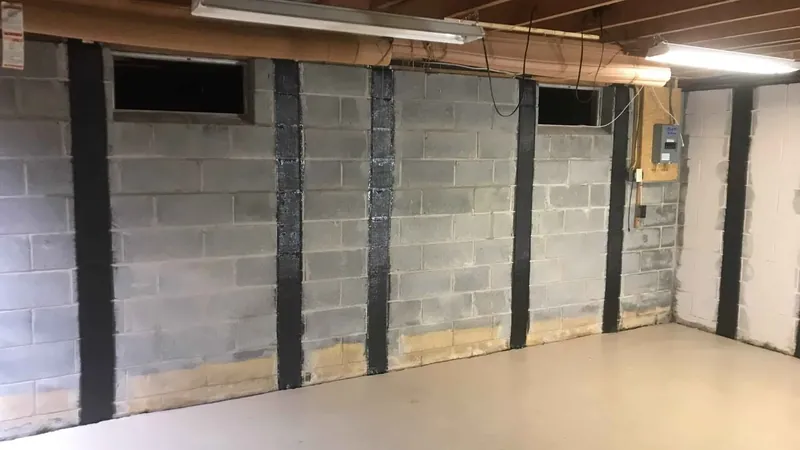
What Homeowners Describe
We see a crack running across the ground a short distance behind the top of the wall. Grass has sunk into it, and the soil on the low side sits a little lower than the rest. After rain, water pools in the crack instead of running off. The wall below may show lean or damp patches. The crack line runs parallel to the wall, which ties the two problems together.
What Is Usually Happening
Ground behind a retaining wall is held by the wall plus its drainage. A crack parallel to the wall often means the soil behind is settling or moving toward the wall. Water in the crack adds weight and softens the soil, which makes the movement worse. The crack and the wall are one problem seen in two places.
What It Does to the House
Soil moving toward the wall increases the load it carries. The crack widens, the ground behind it drops, and anything built on that slope starts to lose support. The wall takes the extra push. The wall below takes the extra load from the moving ground.
What It Means for the People Inside
Ground that is moving can fail without warning and take the wall with it. That is a safety concern for anyone below, and water in the crack can reach foundations behind the slope. Movement under a wall can be sudden.
The Next Step That Saves Money
Have the slope and the wall checked together, then repair the crack, restore drainage, and reinforce the wall if the soil load has increased. Do this before the next wet season, when the ground moves most.
EcoSpect works across the Finger Lakes and Central New York, including Onondaga County, Ontario County, Schuyler County, Seneca County, Steuben County. If you are outside these counties, call (855) DRY-BSMT and we will confirm coverage.
What People Search Next
- slope crack
- ground crack behind wall
- retaining wall soil
- slope settling
- water behind retaining wall
- wall pressure
- slope repair