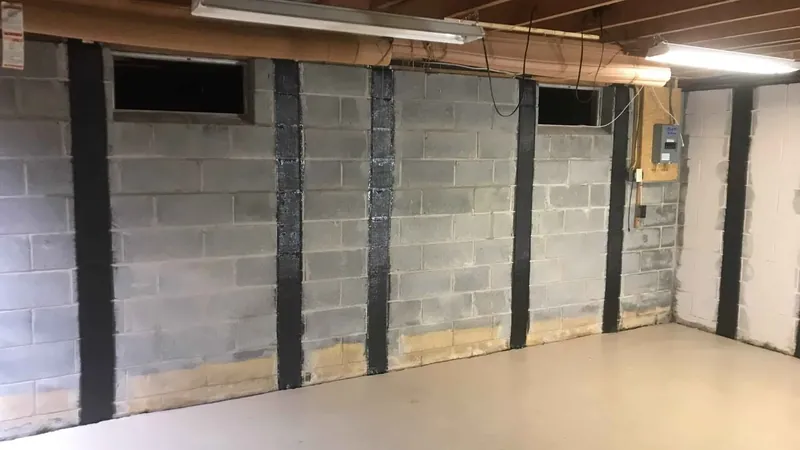
What Homeowners Describe
We see the wall lean toward the water, and the gap at the top is wider on one end. The cap is cracked or out of line, and joints show offset. At low water we look for undercut soil at the base, and on the land side we check for sunken soil and cracks in the paving. The waterline stain often sits higher on one end. The soil behind the wall may settle away from the cap.
What Is Usually Happening
A seawall holds back soil while water pushes on the other side. Waves and changing water levels scour soil from the base, and the wall loses support at its toe. Once that support is gone, the wall tips toward the open side, where nothing holds it back. The wall is only as strong as the soil that holds its toe.
What It Does to the House
Left alone, the tilt grows and the wall can fail in a storm. Soil behind it erodes into the water, and the yard or structure above loses ground. A failed wall can also change how water reaches the shore and speed up erosion nearby. Water also works into the open joints.
What It Means for the People Inside
A leaning seawall is a fall and collapse risk for people and pets near the edge. Loss of soil can undermine walks, decks, and foundations. Fast water at a breach can be dangerous during storms.
The Next Step That Saves Money
Have the wall surveyed for tilt, toe scour, and joint damage. A repair should restore support at the base and tie the wall into stable soil before the next storm season. Temporary blocking can reduce the load.
EcoSpect works across the Finger Lakes and Central New York, including Tompkins County, Wayne County, Yates County, Cayuga County, Chemung County. If you are outside these counties, call (855) DRY-BSMT and we will confirm coverage.
What People Search Next
- seawall tilting
- seawall leaning
- seawall toe scour
- seawall repair
- concrete seawall crack
- seawall erosion
- seawall stabilization