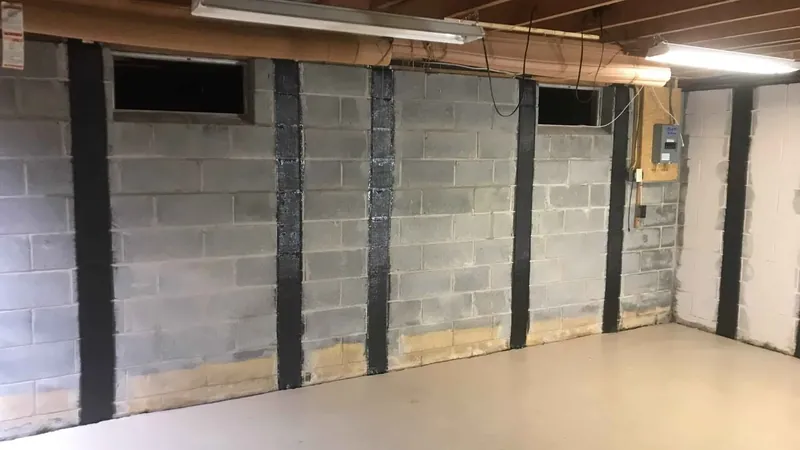
What Homeowners Describe
We see dark streaks running down the face of the wall and damp patches that do not dry. The weep holes are stained or plugged with soil, and water stands at the base after rain. In some spots the wall face bulges slightly. The streaks start near the top and run to the base, which points to water behind the wall. The wall face looks darker below the weep holes.
What Is Usually Happening
A retaining wall holds soil and water. Drains behind the wall and weep holes through it let that water out. When they clog, water builds up behind the wall and adds weight the wall was not designed to carry. The wall then leans or bulges, and the streaks on the face show where water is finding its way.
What It Does to the House
Water pressure behind the wall pushes it toward the low side. Cracks open, the wall leans, and the soil it holds starts to move. The wall may still look solid while the load behind it keeps rising. The soil behind the wall shifts as water pushes.
What It Means for the People Inside
A wall that fails can release soil and water suddenly, which is a safety risk to anyone below. Long term damp at the base can also soften nearby foundations. Water at the base can reach a nearby foundation.
The Next Step That Saves Money
Have the weep holes and the drain behind the wall cleared, and check that water has a path away from the base before repairing the face. Do this before the wall leans further into the yard.
EcoSpect works across the Finger Lakes and Central New York, including Onondaga County, Ontario County, Schuyler County, Seneca County, Steuben County. If you are outside these counties, call (855) DRY-BSMT and we will confirm coverage.
What People Search Next
- retaining wall drain
- weep holes blocked
- water behind wall
- retaining wall leaking
- wall drainage repair
- wall bulging
- retaining wall stains