What Homeowners Describe
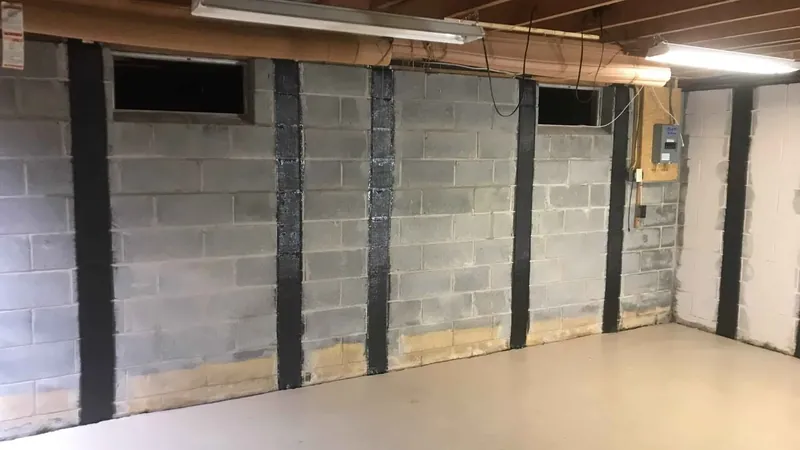
After a hard rain we find a water line along the base of the wall and wet floor near the cove joint. Water has come through cracks and tie holes, and the sump pit is full. Stored boxes sit in damp cardboard. Outside, the soil slopes toward the house and downspouts end at the wall. The floor drain may back up, and the smell of wet concrete stays for days.
What Is Usually Happening
Heavy rain saturates the soil faster than it can drain. Water in saturated soil pushes against the wall, and it takes the easiest path inside through cracks, joints, and porous block. A clogged drain tile or a missing one leaves that water with nowhere to go. Gutters and grading that send water to the wall make the pressure worse.
What It Does to the House
Each flood damages flooring, drywall, insulation, and whatever is stored on the floor. Repeated wetting weakens the wall and the floor where they meet. Mold can start within a day or two in damp materials. The next storm usually brings more water than the last.
What It Means for the People Inside
Flood water in a basement can carry soil and sewage, and it can support mold growth in walls and flooring. Damp air moves upstairs and can affect breathing for sensitive people. Water near outlets and appliances is an electrical shock risk.
The Next Step That Saves Money
Fix the water outside first by moving gutters and grading away from the wall, then confirm the drain tile and sump can handle a storm. Interior coatings alone do not stop pressure. Watch the wall during the next storm.
EcoSpect works across the Finger Lakes and Central New York, including Steuben County, Tompkins County, Wayne County, Yates County, Cayuga County. If you are outside these counties, call (855) DRY-BSMT and we will confirm coverage.
What People Search Next
- basement flooding after heavy rain
- basement leaks when it rains
- water in basement after storm
- hydrostatic pressure basement
- basement waterproofing
- drain tile clogged
- basement seepage cove joint