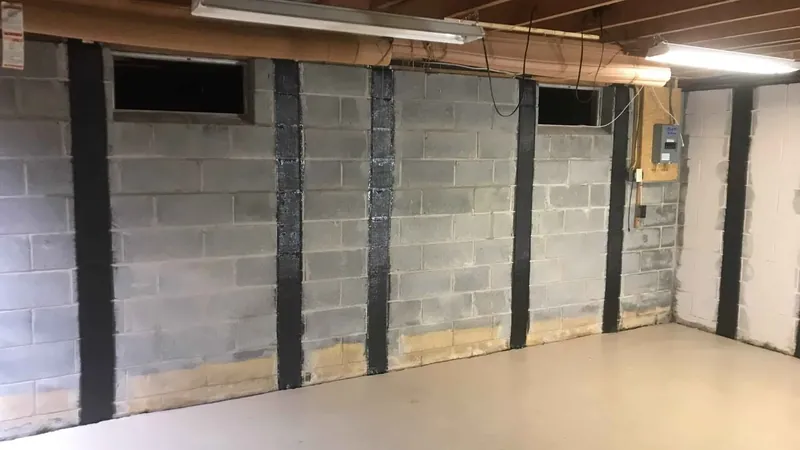
What Homeowners Describe
We find a horizontal crack along a mortar joint near the middle of the wall, and it is wider in the center than at the ends. The block above it leans in slightly. White powder shows along the crack, and the base of the wall has moved away from the floor. The face sounds hollow in a few spots. A straight edge held against the wall shows a gap behind it.
What Is Usually Happening
Block walls are strong in compression and weak against bending. Soil pressure from saturated ground pushes the wall inward, and the wall bends around a horizontal line at mid height. That line is where the crack opens. Frost, roots, and heavy equipment near the wall add to the pressure, and missing drainage makes it worse.
What It Does to the House
A bowed wall can move suddenly when the pressure rises, and block courses can drop. The floor joists that bear on the wall may lose support. Water enters through the crack and the wall keeps taking on moisture. Face repairs that do not address the soil pressure do not stop the movement.
What It Means for the People Inside
A wall that fails can drop masonry into the space below, which is a serious safety risk. Water through the crack can raise humidity and support mold. Falling block and a shifting floor are hazards for anyone in the basement.
The Next Step That Saves Money
Keep the area in front of the wall clear and have the wall measured for plumb and bow. Do not backfill against it or park heavy equipment nearby until it is assessed. Take photos with a level in place.
EcoSpect works across the Finger Lakes and Central New York, including Jefferson County, Monroe County, Onondaga County, Ontario County, Schuyler County. If you are outside these counties, call (855) DRY-BSMT and we will confirm coverage.
What People Search Next
- horizontal crack block wall
- block wall bowing
- basement wall horizontal crack
- block foundation wall movement
- bowed block wall repair
- soil pressure basement wall
- block wall mortar crack