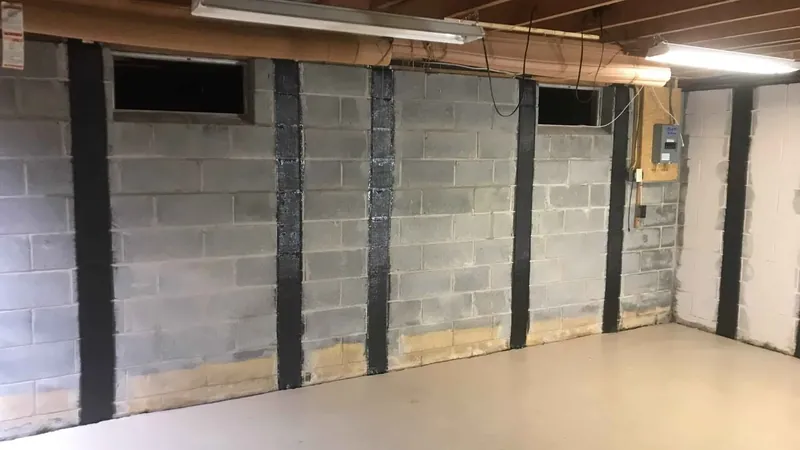
What Homeowners Describe
We see a gap open at the joint where the wall meets the floor, and the wall leans out near the top. We see the floor slab pulling away and cracks that widen with height. The wall may also show a horizontal crack partway up. The floor may slope toward that wall. We check the sill plate and the anchor points for movement. The baseboard may pull away from the floor, and the door above may stick.
What Is Usually Happening
The wall and floor are tied together so they act as one box. When the floor edge drops or the wall rotates, that tie opens. Soil pressure outside and settling under the floor both pull the joint apart. The gap is a sign of movement, not a failed seal. A gap at the base is often the first sign of rotation.
What It Does to the House
Left alone, the gap widens and the wall keeps rotating. Water and air enter at the joint, and the floor loses edge support. The wall may need bracing, or in a severe case, realignment from the outside. A wall that rotates can also let in pests.
What It Means for the People Inside
An open joint lets soil gas and damp air into the basement. Water at the joint can support mold growth and damage finishes. A wall that is rotating is a structural safety concern, especially if the movement is recent.
The Next Step That Saves Money
Have the joint and the wall measured for movement and the soil outside checked for water pressure. Repair should deal with the cause and then close the joint so it stays closed. Then monitor the joint.
EcoSpect works across the Finger Lakes and Central New York, including Seneca County, Steuben County, Tompkins County, Wayne County, Yates County. If you are outside these counties, call (855) DRY-BSMT and we will confirm coverage.
What People Search Next
- wall away from floor
- wall floor gap
- basement wall leaning
- wall joint separation
- wall rotation
- wall crack widening
- basement wall gap