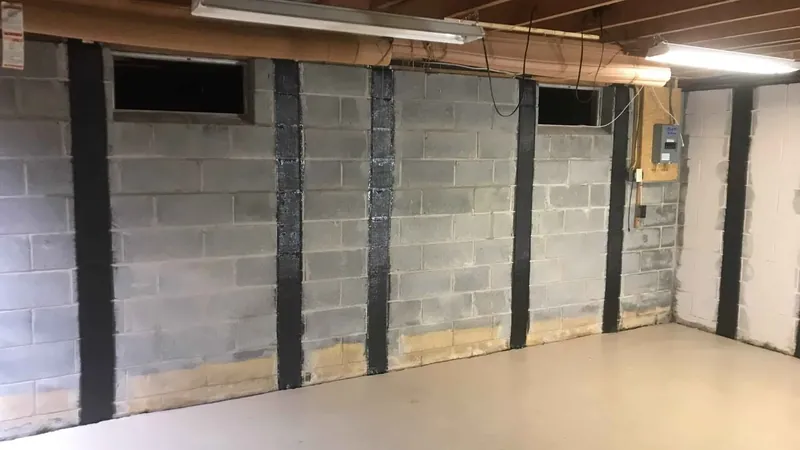
What Homeowners Describe
We see damp patches and white mineral lines on the gunite wall, often in a band near the floor or along a cold joint. Water beads on the surface after rain, and paint or coating lifts in sheets. Small cracks show a wet edge, the wall feels cool, and the area smells earthy. The stain often follows a joint across the wall. Water may also rise through the floor at the base of the wall.
What Is Usually Happening
Gunite is concrete sprayed onto a form or a soil face, and it is not waterproof on its own. Water moves through hairline cracks, cold joints, and thin spots. Once water is inside the wall, it finds the easiest path and shows up indoors as a wet patch. A coating alone will not stop water that is already inside.
What It Does to the House
Left alone, the leak keeps the wall and floor damp and breaks down coatings. Mineral lines build, paint fails, and any finish or stored goods near the wall take on moisture. Repeated wetting and drying can widen the cracks over time. Efflorescence returns unless the water stops.
What It Means for the People Inside
A wet gunite wall can raise indoor humidity. Damp surfaces may support mold growth, and moisture can carry musty odors into the rooms above. Water at the base can also soften flooring and nearby framing.
The Next Step That Saves Money
Have the wall mapped for cracks and joints, then sealed with a flexible waterproof coating and any cracks routed and filled. Water control at the outside face matters as much as the coating, so check it first.
EcoSpect works across the Finger Lakes and Central New York, including Wayne County, Yates County, Cayuga County, Chemung County, Cortland County. If you are outside these counties, call (855) DRY-BSMT and we will confirm coverage.
What People Search Next
- gunite wall leaking
- gunite wall crack
- gunite waterproofing
- water through concrete wall
- gunite wall repair
- cold joint leak
- gunite wall damp