Henrietta, NY
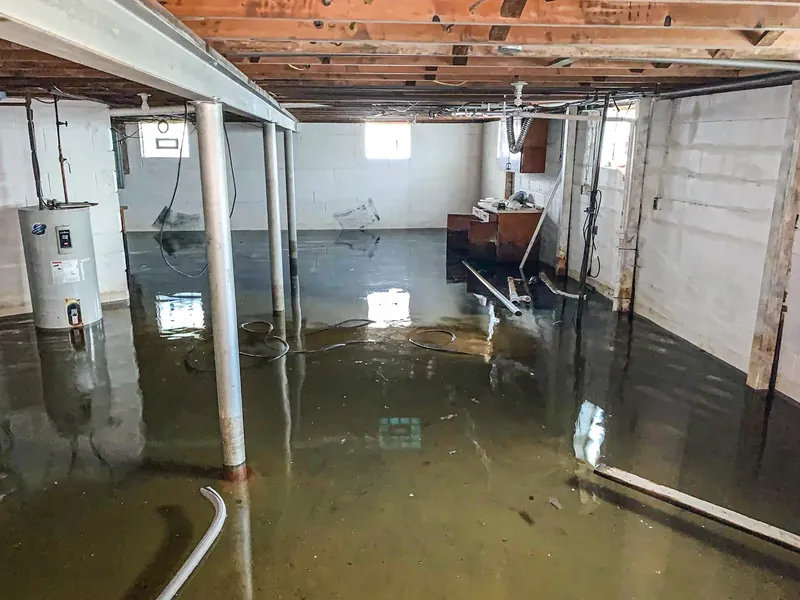
A wet basement in Henrietta is more than an inconvenience, it threatens your flooring, your belongings, and the air your family breathes every day. Many Henrietta homeowners avoid going into their basement because of the smell, the dampness, or the fear of finding something worse each time.
A sump pump that runs constantly or fails during a storm is a warning that your Henrietta home's water management system needs professional attention. Sill rot in your Henrietta home's foundation sill plate is caused by persistent moisture and weakens the connection between the foundation and the framing above.
If your finished Henrietta basement has recurring moisture after a storm, the waterproofing that should be protecting it is no longer functioning as designed. Your Henrietta basement floor drain backing up and bubbling water is a sign that the drainage system is overwhelmed or blocked and needs professional assessment.
When water gets into your Henrietta basement it creates the conditions for mold, which spreads quickly and is expensive to remediate without fixing the source.
If you smell mold but cannot see visible growth in your Henrietta basement, it is likely growing in the insulation, walls, or crawl space where you cannot see it.
Efflorescence (white mineral staining) on your Henrietta foundation walls shows that water is moving through the concrete repeatedly and leaving dissolved minerals behind. That dark patch on the wall of your Henrietta basement is not just cosmetic, it is moisture working its way through the concrete every time it rains.
Standing water in the corner of your Henrietta basement after every rain is a clear sign that your drainage and waterproofing are not working together. Insurance policies for Henrietta homes often exclude water damage from foundation cracks unless the homeowner has documented repairs in place.
Condensation collecting on windows or pipes in your Henrietta basement indicates that humidity is high enough to support mold growth in insulation and on wood.
To speak with the EcoSpect team about your Henrietta home, call (855) DRY-BSMT today for a free estimate.
Talk to a specialist and get a clear plan for your property.
Call (855) DRY-BSMT













Contact EcoSpect today to install perimeter drainage channels in your Henrietta home that stop floor seepage before it spreads.
After EcoSpect waterproofs your Henrietta basement, you stop checking it after every storm. The perimeter drainage channel we install captures water at the floor edge and routes it to the sump before it can spread across the slab.
Every Henrietta waterproofing project comes with a written warranty covering the system and the labor. Adam Schrader's standard is clear: if water returns through a path we addressed, we come back until it is right.
To speak with Adam Schrader and the EcoSpect team about your home in Henrietta, call (855) DRY-BSMT or visit our contact page to schedule a free estimate.
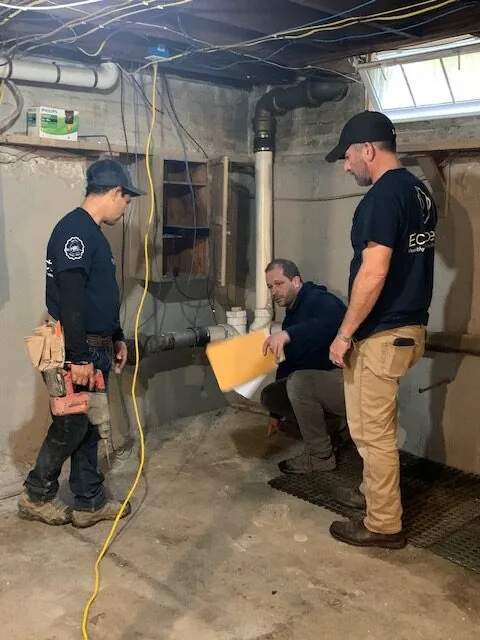
Hi, my name is Adam with EcoSpect Healthy Basement Healthy Home. Today we're going to talk about why drains fail. It's the most common question that we receive on a daily basis. What you have in your basement is your foundation wall.
That foundation wall sits on top of your footer. You're gonna typically have a drain either at the exterior outside of the footer or interior in the basement side of your footer. Every time it rains water travels down the outside of the home, enters into that drain. Water carries sediments.
That sediment begins to build up inside that drain. As that sediment builds up your four inch round drain becomes less capable. Water is less able to fill the drain because there's more dirt. Consequently, that hydraulic pressure can no longer be released.
And what you'll typically find is light rains, moderate rains, there's still a little bit of space in the drain. Heavy rains, downpours, the drain becomes overwhelmed. Water then has nowhere to go. It begins to run under your footer and into your basement, over your footer, through the cove seam and into your basement.
Over time that drain ultimately will completely fill and clog with dirt. When that happens your drains have zero capacity to carry water. And at that point what you'll typically find is moisture or water almost continuously in your home, and particularly when it rains. Like our Facebook page.
Follow us on Instagram. We're here to help you.
Yes, our cleanup ports are flush to the top of the concrete floor, making it easy to cover them with your choice of flooring. Many of our customers have successfully covered their clean out ports with carpet, tile, or other types of flooring without any issues.
Clean out ports are an important part of your plumbing system, as they provide access to your drain lines for maintenance and repairs. It's crucial to ensure that your clean out ports remain accessible, even if they are covered with flooring.
If you're considering covering your clean out ports, it's a good idea to consult with a professional plumber or flooring installer to ensure that it's done properly. They can help you choose the best method for covering your clean out ports while still maintaining access to them when needed.
For a step-by-step guide on covering a plumbing cleanout port, our team at EcoSpect can provide you with the necessary information and resources.
We highlight the importance of maintaining access for future maintenance and repairs, and provide detailed information on the function and purpose of cleanout ports in your plumbing system.
If you have any further questions or concerns about covering your clean out ports, please don't hesitate to contact us or give us a call at (855) DRY-BSMT.
Our team of experienced professionals is here to help you make informed decisions about your home's plumbing system and ensure that your clean out ports remain accessible and functional.
Tell us what you are seeing and we will tell you what it takes to fix it, in plain language, before anyone touches the wall.