Radon is a colorless, odorless gas that can build up in any Perinton home without any warning signs that you would ever notice on your own. Long-term radon testing in Perinton over 90 days gives a truer average of your home's radon exposure across seasonal variations.
New York State has regions with higher radon risk, and Perinton homeowners who have not tested recently may not know what their current levels are. The difference between a 2-pCi/L reading and a 5-pCi/L reading in Perinton represents a significant health risk multiplication.
Block wall construction in Perinton homes creates hollow cores that can act as radon entry pathways if they are not sealed as part of mitigation. Children who spend time in a Perinton basement with higher radon levels are exposed to the highest concentration of radon in the home.
Short-term radon tests in Perinton taken during favorable conditions may not represent the worst-case scenario your home actually experiences. Post-mitigation radon testing in Perinton confirms that the system installed in your home is working and that levels are now within the safe range.
Many Perinton homeowners who test for radon find that mitigation costs far less than they expected, and the results are verified after installation. Finished basements in Perinton homes without radon testing are exposing families to levels that could exceed 10 times the EPA guideline.
An open sump pit in your Perinton basement is a direct pathway for radon gas from the soil to enter the air you breathe.
A Perinton home that tested low for radon years ago may test higher today if the foundation has developed new cracks or the soil conditions have changed.
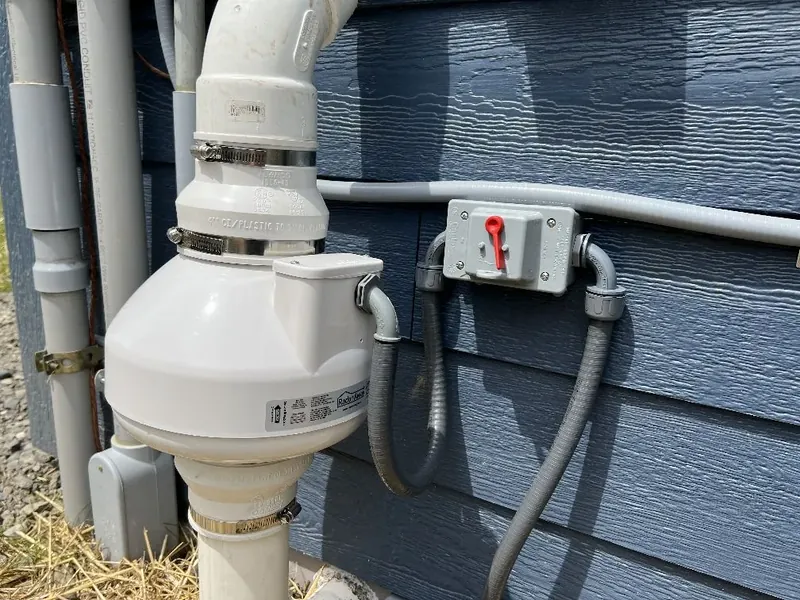
A Perinton fan running to mitigate radon that fails or is turned off means radon levels will rise back to dangerous levels within days.
To speak with the EcoSpect team about your Perinton home, call (855) DRY-BSMT today for a free estimate.
Talk to a specialist and get a clear plan for your property.
Call (855) DRY-BSMTAdam Schrader reviews every report before it is delivered.
To speak with Adam Schrader and the EcoSpect team about your home in Perinton, call (855) DRY-BSMT or visit our contact page to schedule a free estimate.
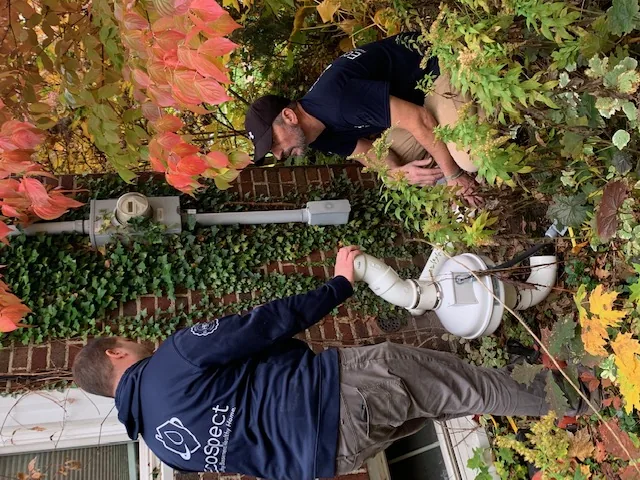
A typical radon mitigation system installation by us takes one to two days to complete, depending on the complexity of the project. Factors such as the size and design of the home, the type of foundation, and the specific mitigation system required can impact the installation time.
The installation process involves sealing foundation cracks, drilling a hole through the foundation floor, installing a vent pipe, and connecting a fan to draw radon gas out of the home. Our qualified radon mitigation professionals ensure the system is installed correctly and effectively reduces radon levels.
Radon mitigation cost depends on the size and design of the home, and we price it after the test and a walkthrough. The system is sized to the test result, and a post-installation test confirms what it achieved.
If you have any questions about radon mitigation system installation or would like to schedule a consultation, please contact us or call us at (855) DRY-BSMT. Our experienced professionals at our are here to help ensure your home is safe from the dangers of radon gas.
The EPA recommends considering radon mitigation at levels of 2.0-3.9 pCi/l and considers levels of 4.0 pCi/l or higher to be the level at which to mitigate. The WHO recommends reducing radon levels in homes to below 2.7 pCi/L.
Radon exposure is a serious health risk and the second leading cause of lung cancer after smoking. The only way to know your home's radon level is to test it.
We install radon mitigation systems to help keep you and your family safe, and we can mail you a test kit if you have not tested yet. Contact us today to request a test kit or call us at (855) DRY-BSMT to speak with one of our radon experts.
Our team is dedicated to providing you with the knowledge and resources you need to make informed decisions about radon mitigation in your home or business.
Radon is a radioactive gas produced by uranium decaying in soil and rock. It has no colour, no smell, and no taste, which is why a test is the only way to find it.
It enters through the paths air takes into a house from the ground: cracks in the slab and walls, the cove joint where the wall meets the floor, gaps around pipes and sump pits, and, in some homes, well water. A house under negative pressure draws soil gas in through those paths.
Outdoors the gas dilutes to nothing. Indoors it collects in the lowest level, which is why the test goes there.
A radon mitigation system works by depressurizing the area underneath a basement slab or vapor barrier, drawing radon-polluted air out of the house and expelling it above the roof line using a radon-approved fan. Proper system design and installation are crucial for effective radon mitigation.
If you're buying or selling a home, it's essential to test for radon and disclose the results. At EcoSpect, our experienced team is dedicated to helping you ensure your home is safe from the dangers of radon.
For more information on radon mitigation systems or to schedule a consultation, please contact us or call us at (855) DRY-BSMT. Don't wait until it's too late – take action now to protect your family from the risks of radon exposure.
Tell us what you are seeing and we will tell you what it takes to fix it, in plain language, before anyone touches the wall.