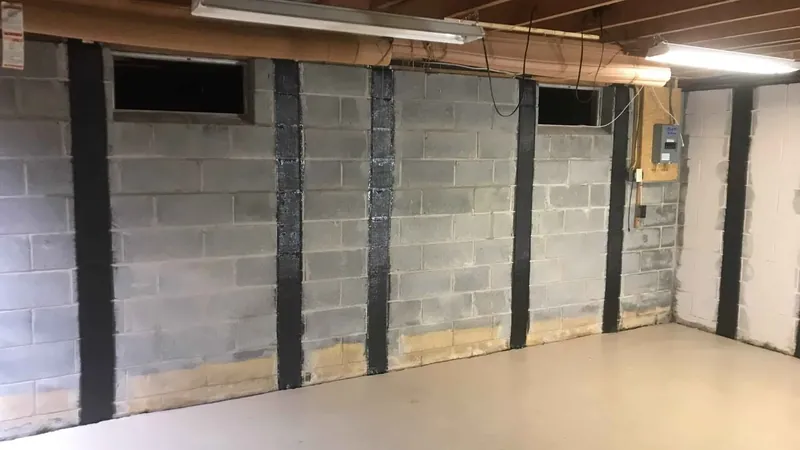
What Homeowners Describe
We see the ground next to the house sitting higher than the ground a few feet out, and water standing in a low band along the wall. Mulch beds have settled, and the soil line covers part of the siding or the foundation. After rain, the puddle stays long after the rain stops. The soil line against the wall sits higher than the yard beyond it. The low band holds water after every storm.
What Is Usually Happening
Water follows the grade. When the yard tips toward the house, every rain sends water to the foundation instead of away from it. Soil against the wall holds that water, and the wall takes it on the outside face. The grade also washes soil into foundation drains and window wells. Every storm adds to the water at the wall.
What It Does to the House
Water at the foundation keeps the soil wet and the basement under pressure. The wall stains, the footing stays damp, and window wells fill. Fixing the inside does not change the water arriving from the yard. The soil against the wall stays saturated for days.
What It Means for the People Inside
Damp soil against the wall can raise basement humidity, and damp air may support mold growth. Standing water near the house also draws pests and mosquitoes. Damp ground near the house can also invite termites.
The Next Step That Saves Money
Have the grade reshaped so the ground falls away from the wall, then confirm that downspouts and surface water follow the same path. Do this before the next rainy stretch, since the grade decides where water goes.
EcoSpect works across the Finger Lakes and Central New York, including Cortland County, Jefferson County, Monroe County, Onondaga County, Ontario County. If you are outside these counties, call (855) DRY-BSMT and we will confirm coverage.
What People Search Next
- yard slopes toward house
- water against foundation
- regrade yard
- soil on siding
- rainwater basement
- yard drainage
- standing water