The only way to know if your Greece home has unsafe radon levels is to test it, there is no smell, no visible sign, and no way to detect it without a test.
Radon is the second leading cause of lung cancer in the United States, and many Greece homeowners have never tested their home despite living in an affected region.
New York State has regions with higher radon risk, and Greece homeowners who have not tested recently may not know what their current levels are. If someone in your Greece household is a smoker, the combined risk of radon and tobacco significantly increases the likelihood of lung cancer from exposure.
Short-term radon tests in Greece taken during favorable conditions may not represent the worst-case scenario your home actually experiences. Post-mitigation radon testing in Greece confirms that the system installed in your home is working and that levels are now within the safe range.
Finished basements in Greece homes without radon testing are exposing families to levels that could exceed 10 times the EPA guideline. Old radon mitigation systems in Greece homes that were installed decades ago may no longer be functioning effectively.
Short-term radon testing in Greece gives you an initial reading in just a few days, a small investment of time that can protect your family for years. Pressure differentials between your Greece basement and the surrounding soil actively push radon gas into the home through any available crack or gap.
The difference between a 2-pCi/L reading and a 5-pCi/L reading in Greece represents a significant health risk multiplication. Children who spend time in a Greece basement with higher radon levels are exposed to the highest concentration of radon in the home.
Long-term radon testing in Greece over 90 days gives a truer average of your home's radon exposure across seasonal variations.
To speak with the EcoSpect team about your Greece home, call (855) DRY-BSMT today for a free estimate.
Talk to a specialist and get a clear plan for your property.
Call (855) DRY-BSMTWe are the leaders in radon mitigation in Greece, designing sub-slab systems for homes testing above the EPA action level.
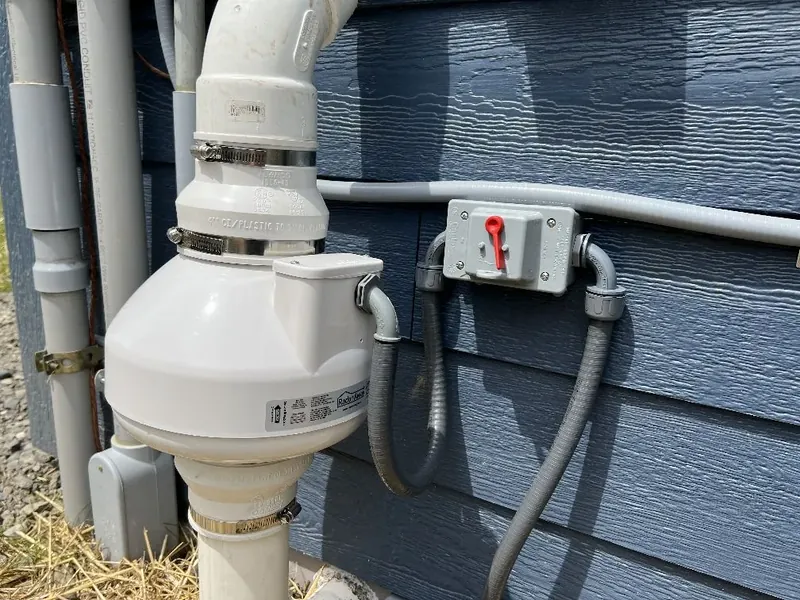
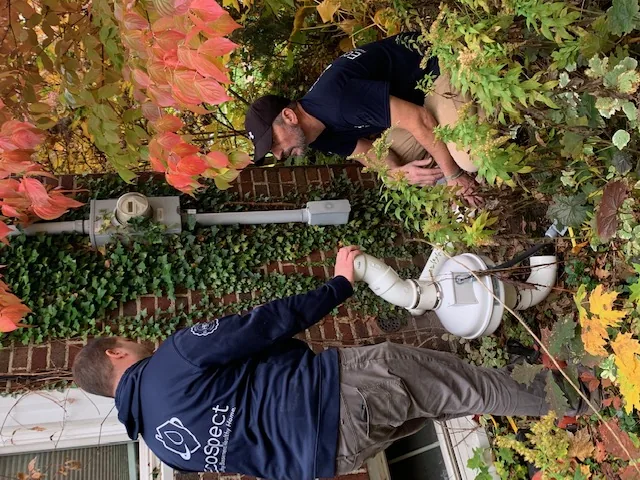
After EcoSpect installs a radon mitigation system in your Greece home, a follow-up test confirms that levels have dropped below the EPA action level. The system runs continuously and quietly; the protection is always on.
Adam Schrader's standard for Greece radon work is that the post-mitigation test must show levels at or below 2.0 pCi/L before the project is considered complete. Every system is documented, labeled, and the fan is covered by a warranty.
To speak with Adam Schrader and the EcoSpect team about your home in Greece, call (855) DRY-BSMT or visit our contact page to schedule a free estimate.
Radon is a radioactive gas produced by uranium decaying in soil and rock. It has no colour, no smell, and no taste, which is why a test is the only way to find it.
It enters through the paths air takes into a house from the ground: cracks in the slab and walls, the cove joint where the wall meets the floor, gaps around pipes and sump pits, and, in some homes, well water. A house under negative pressure draws soil gas in through those paths.
Outdoors the gas dilutes to nothing. Indoors it collects in the lowest level, which is why the test goes there.
Tell us what you are seeing and we will tell you what it takes to fix it, in plain language, before anyone touches the wall.