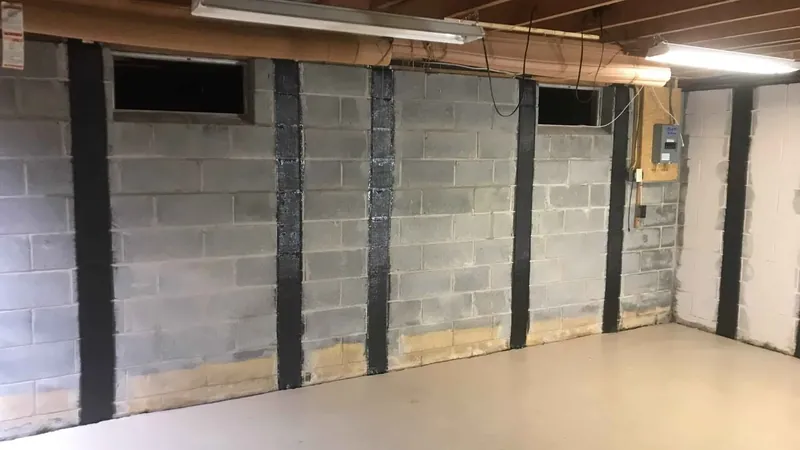
What Homeowners Describe
We find the crack is longer than it was in an older photo, and its width has changed at the middle. We mark the ends with a pencil line and a date, then check again after a season. Paint bridges the crack at one end and is split at the other. A level on the wall may show a lean. We also check the outside face of the wall for a matching crack.
What Is Usually Happening
A crack that grows is a sign the wall is still moving. Settlement, soil pressure, or a change in water load can keep pushing the wall. A repair that only fills the surface hides the movement without stopping it, so the crack reopens and often gets wider. A surface patch can look fixed while the wall keeps moving.
What It Does to the House
Left alone, the crack lets water into the wall and the movement continues. Mineral lines and damp spots spread, and the wall loses stiffness as the crack lengthens. The repair gets bigger the longer the movement runs. Paint and coating fail first along the crack.
What It Means for the People Inside
Water through a growing crack can raise indoor humidity and support mold growth. The crack can also become a path for soil gas. Ongoing movement is a structural concern, so the risk is not only about water.
The Next Step That Saves Money
Have the crack monitored with dated marks and the wall checked for the cause of movement. A repair should stabilize the wall first, then seal the crack so it does not reopen. Then record the width.
EcoSpect works across the Finger Lakes and Central New York, including Ontario County, Schuyler County, Seneca County, Steuben County, Tompkins County. If you are outside these counties, call (855) DRY-BSMT and we will confirm coverage.
What People Search Next
- wall crack growing
- crack wider repair
- monitor wall crack
- basement crack spreading
- crack movement
- crack repair failed
- wall crack length