What Homeowners Describe
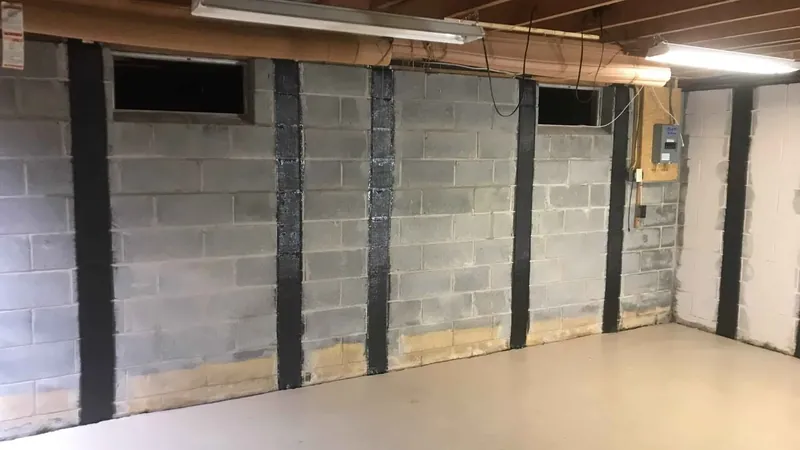
At the base of the wall, we see block courses that are cracked, spalled, or pushed inward. Mortar joints near the floor are wider than the joints above. The bottom course may sit below the floor line, and the block faces look crushed. A horizontal crack often runs a course or two above the floor, and the wall may lean in near the top. The floor slab may show a gap at that same line.
What Is Usually Happening
Soil pressure and water load push against the lower wall, where the span between the floor and the footing is weakest. When the block cannot carry that load, the mortar crushes and the wall rotates inward at its base. This is a movement pattern, not a cosmetic crack. The load then concentrates on a small area of block.
What It Does to the House
Left alone, the crush zone keeps spreading along the wall. The wall leans inward, the floor above can lose support at its edge, and water finds the open joints. Repairs get larger once the wall has moved past a small tilt. Water also gets into the block itself.
What It Means for the People Inside
A wall that is moving opens paths for water and soil gas. Damp block and wet insulation can support mold growth, and a wall that loses strength may become a structural risk. Fast movement is the case that needs quick action.
The Next Step That Saves Money
Have the wall measured for tilt and the base checked for crush. A repair plan should address the soil load outside the wall, not just the cracked block inside, so the movement stops. That order matters.
EcoSpect works across the Finger Lakes and Central New York, including Cortland County, Jefferson County, Monroe County, Onondaga County, Ontario County. If you are outside these counties, call (855) DRY-BSMT and we will confirm coverage.
What People Search Next
- block wall crushing
- basement wall base crack
- block wall leaning
- horizontal crack basement wall
- bowed block wall
- basement wall realignment
- block wall repair